
The key to visibly smooth, refined skin
Visibly fine & smoother skin – a desire that many people share. Is this even possible with a cosmetic product? It's clear that no single product can achieve this; in addition to a healthy lifestyle and sufficient sleep, a suitable cosmetic routine is also needed. Some cosmetic active ingredients can make an exceptionally effective contribution here.
When considering the evenness of the skin surface, it is important to know:
Our skin lives in a 28-day cycle. During these 4 weeks, new cells constantly form in the lowest layer of the skin, continuously moving to the surface. After 28 days, they are finally dissolved keratolytically and shed as skin flakes. We utilize this natural regeneration effect when using a cosmetic product for a refined complexion.
The HERO INGREDIENT here is glycolic acid. This small organic fruit acid is the simplest in the series of so-called α-hydroxy acids (AHA). Alpha hydroxy acids are natural metabolic intermediates in the human body and are also found in many foods. Examples such as lactic acid, mandelic acid, glycolic acid, or even citric acid are known to renew the skin through a gentle chemical peel.
What makes glycolic acid so special?
The smallest natural fruit acid, glycolic acid, can be found in various plants. For example, it occurs in sugar cane, unripe grapes, and rosemary. Due to this natural occurrence, it is classified as a fruit acid, and due to its chemical structure, as an alpha-hydroxy acid.
With its small molecular size, it can more easily penetrate between the skin flakes and exert its effect there. In an acidic pH range, glycolic acid can dissolve the cohesion between individual cells and facilitate exfoliation.
In dermatology, this effect is also used for the treatment of acne scars. In this case, concentrations of pure glycolic acid of 10-30% are used.
Due to the low pH value and high concentration, however, such products are only used therapeutically and under medical supervision, as they carry a certain irritating potential. The effect, however, is phenomenal: the chemical peel changes dermal collagen and the matrix through fibroblast modulation, leading to a more even skin surface.
Glycolic Acid in a Capsule
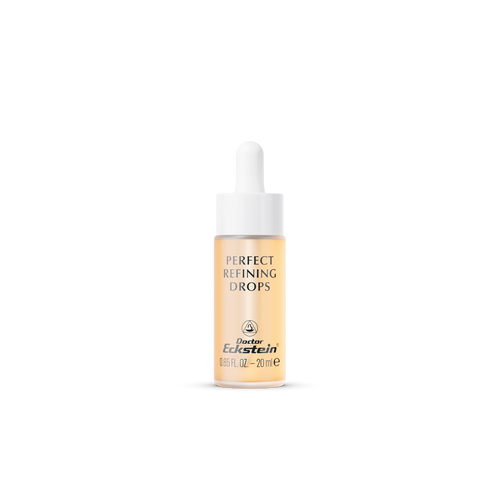
In Doctor Eckstein®'s PERFECT REFINING DROPS, glycolic acid is used in an encapsulated version. The small fruit acid is embedded in a cyclodextrin ring.
These are sugar chains (oligosaccharides) that form a circle and encapsulate the molecule. The irritating effect of the gentle shedding of the uppermost skin layer is therefore not directly perceptible, as the release from this shell is delayed. Chemical exfoliation (chemexfoliation) is thus mild and can best unfold its effect overnight. The dead skin cells on the surface often lead to a dull, sallow complexion. The removal of old skin flakes and the loosening of softened connections between individual cells ensure a more even, smoother complexion in the morning.
Additional Benefits of Glycolic Acid
In addition to removing old skin flakes, glycolic acid provides a short-term increase in cell renewal rate (turnover). This improves the overall skin structure and gives it new radiance and firmness. Studies have also shown long-term effects such as wrinkle reduction and regulated sebum production. By refining the pores, the overall skin appearance is optimized.
Due to the multitude of effects this small molecule has on our skin structure, it influences the overall skin quality with regular use. The complexion appears calmer, as light is better reflected by the smoother surface.
The history of alpha-hydroxy acids goes way back
From centuries-old traditions, it is known that Cleopatra and other famous personalities regularly bathed in donkey milk. The α-hydroxy acid lactic acid contained therein provided a smooth complexion with a similar effect through a gentle chemical peel. It is also documented that in the Middle Ages, faces were rubbed with red wine. Here, the tartaric acid it contains comes into play. In modern medicine, α-hydroxy acids were initially used therapeutically and are now increasingly used in much lower concentrations in cosmetics.
Glycolic acid in cosmetics
A gentle chemical peel with glycolic acid, for example with Doctor Eckstein®'s PERFECT REFINING DROPS, is beneficial for every skin type from time to time. For skin impurities, it can provide relief by supporting the formation of a more even complexion. Thus, regular use stimulates the skin's natural regeneration. Cell renewal also slows down with increasing age or due to external influences. Then the skin often appears sallow, uneven, or thickened. This is exactly where an acceleration and stimulation of the regular skin renewal process helps. The skin can thus gain elasticity and resilience in the long term, which is why it produces positive effects in young and old.
"Glycolic acid is not a quick trend active ingredient where a single application is sufficient. It is rather a regular supporter for a more even complexion."
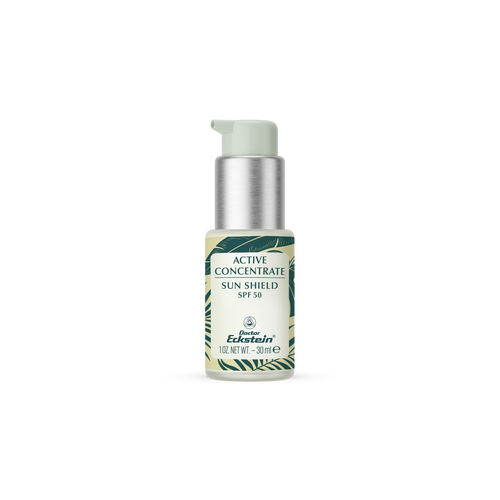
However, with chemical peels, it should generally be noted that the skin is more sensitive to UV radiation due to increased exfoliation on the surface. Exfoliation thins the light callus formed by UV exposure and should be protected by additional UV protection. Otherwise, irritation and unwanted pigment shifts can occur. A combination with the AC SUN SHIELD SPF 50 forms an optimal complement.
Feel free to try our PERFECT REFINING DROPS as an evening ritual and wake up in the morning with a new, matte, fresh complexion. For optimal results, don't forget sunscreen in the morning.
Your Verena Eckstein
Scientific sources:
Grover C, Reddu B S. The therapeutic value of glycolic acid peels in dermatology. Indian J Dermatol Venereol Leprol 2003;69:148-150.
Eileen Clark, Lawrence Scerri, Superficial and medium-depth chemical peels, Clinics in Dermatology, Volume 26, Issue 2, 2008, 209-218.
Kim et al. The effect of physically applied alpha hydroxyl acids on the skin pore and comedone, International Journal of Cosmetic Science, 2015, 37, 519–525.
Datasheets for the efficacy evaluation of active ingredients in cosmetic products – Hydroxy acids, Online – Status July 28, 2026, 2:00 PM.
Ellen Maushagen, Dirk Meyer-Rogge, Fruchtsäuren – Wissenschaftliche Aspekte und therapeutische Anwendung in der Praxis – DT. DERM, 1999, 47 (5), 403-407.