
Carnosine is an extraordinary substance, and numerous studies have now demonstrated its significant influence on aging processes in the body. But what exactly is it? Carnosine is a protein building block naturally produced in the body and found primarily in long-lived nerve and muscle cells, including those in our heart and brain. As an active ingredient, carnosine is found in dietary supplements as well as in medical and cosmetic products.
Scientific detail: Carnosine is a dipeptide that is formed in the body from the two amino acids β-alanine and L-histidine.
Carnosine, an amazing dipeptide
Its effects manifest in various parts of the body: Here are a few examples: Studies involving oral administration of carnosine have demonstrated a cell-rejuvenating and revitalizing effect in cells in the later stages of cell division. These studies also suggest that carnosine could be of great benefit in the treatment of Alzheimer's disease.
Furthermore, carnosine is a powerful antioxidant that can even protect our cells from the most damaging free radicals we know by neutralizing them. These include superoxide and peroxy radicals. If you've already read my blog post "Why Antioxidants Are Amazing," then you know how valuable substances with antioxidant properties are for skincare when they can be made available for this purpose—for example, through extraction, synthesis, or a biomimetic process.
Carnosine, a protein protector?
What particularly interests me about carnosine are the promising research findings regarding its protective effect on proteins. Proteins are among the most important building blocks of our bodies and their functions. Our skin alone consists largely of proteins. These include collagen and elastin, which provide firmness and elasticity.
When proteins are damaged, it has a significant impact on our bodies. This type of protein modification is considered by researchers to be one of the main causes of aging and the reason why our appearance changes as we get older. On the skin, this aging process is particularly noticeable as the skin becomes thinner and looser, fine lines and wrinkles develop, and age spots appear.
Proteins are damaged primarily by oxidation and glycation. We've already learned that carnosine is a powerful antioxidant and thus counteracts oxidative processes in the body. But what exactly is glycation?
Glycation and harmful AGEs
First of all, glycation is a natural process that occurs primarily in the bloodstream and in tissues. This includes, for example, our skin, kidneys, and the lenses of our eyes. During glycation, a sugar reacts with proteins, lipids, or DNA in our body.
However, if excess sugar frequently accumulates in the blood, for example, due to excessive consumption of sugary foods or diabetes, glycation leads to the formation of advanced glycation end products, also known as AGEs. Unhealthy behaviors that create oxidative stress in the body, such as smoking or prolonged, unprotected sun exposure, accelerate the formation of AGEs.
AGEs are difficult for the body to break down and accumulate. This can lead to inflammatory responses and generate even more oxidative stress. For example, it has been found that AGEs are increasingly present in tissues and organs in numerous age-related degenerative diseases. Furthermore, AGEs can bind to proteins such as collagen and elastin, impairing their structure and function. Inflammatory processes and oxidative stress further damage these proteins.
Carnosine, multifunctional and of great interest for aging research
The example of glycation clearly illustrates why carnosine is considered multifunctional in research, as it possesses abilities that can counteract the formation of AGEs – and their effects – in various ways: carnosine is able to reduce the reaction between proteins and sugars, it acts as an antioxidant, and it also has anti-inflammatory properties. Studies therefore support the assumption that carnosine performs an antiglycation function in the body.
Intensive research on the substance continues, and I am very curious to see the results. Above all, I am naturally interested in what potential carnosine still holds for skincare and what remains to be discovered.
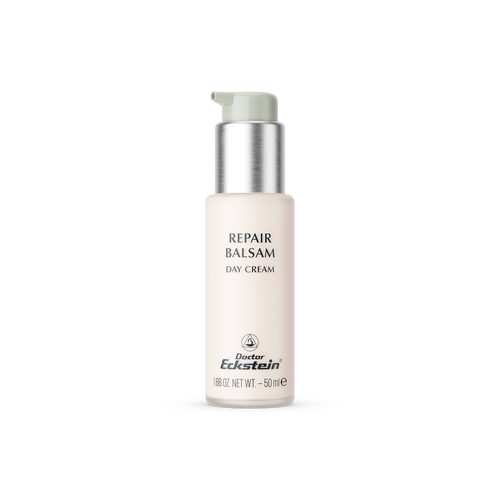
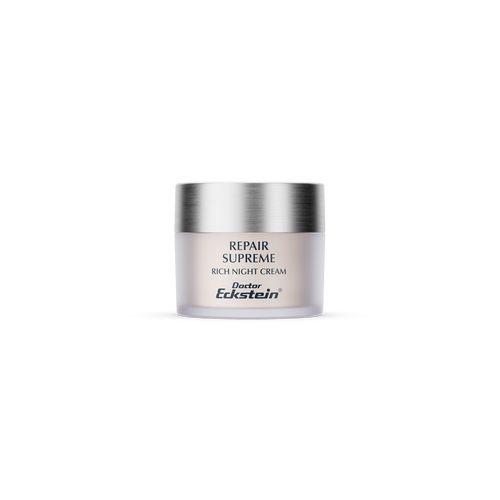
At Doctor Eckstein®, we use synthesized carnosine, particularly due to its strong antioxidant effect, in our Repair Day and Night Care for mature skin that tends to be dry and for sun-stressed skin.
Did you know that both carnosine and AGEs are found in our food?
Carnosine in the diet
Although the body produces carnosine itself, its concentration decreases with age. Therefore, a tailored diet or supplementation can be beneficial as needed. It's important to know that plant-based foods do not contain carnosine; it can only be obtained through the consumption of meat and fish. For example, beef contains 150 to 200 mg of carnosine per 100 g, poultry 70 to 200 mg per 100 g, and mackerel approximately 200 mg per 100 g.

AGEs in the diet
You should try to keep your intake of harmful AGEs as low as possible. It's impossible to avoid them completely, as AGEs are found in baked goods. Above all, AGEs are found in foods rich in protein, fat, and sugar. You should also be aware that certain processing and cooking methods can dramatically increase the AGE content of foods. These include grilling and roasting at high temperatures, as well as deep-frying. Highly processed foods, such as fast food, also often have a high AGE content.
If you do decide to have grilled meat or fries, combine them with a fresh salad dressed with tomatoes, spinach, or bell peppers, for example. The antioxidants in these foods can mitigate the negative effects of AGEs in our bodies.
Aging – the issue of our time
Few topics are discussed and researched as extensively in our time as aging. Sooner or later, each of us asks ourselves the question: "What do I have to accept as I get older, and what can I do to make this process as optimal as possible for myself?"
Research has long since shown us that bodily processes cannot be reduced to a simple answer; they require a holistic, or comprehensive, approach. We already know, for example, how important regular exercise is for maintaining mobility well into old age. We know how essential a balanced diet is for supplying our cells with vital nutrients and keeping them functioning properly. We know that life circumstances, such as chronic stress, can contribute to faster aging. We see that aging is also clearly reflected in the changes to the appearance of our skin over the course of our lives.
And new research findings are constantly emerging, sharpening our understanding of the aging process and revealing ways to slow it down. While we are still far from "eternal life" (if that is even desirable), we are not far from "aging well," as the example of "carnosine" shows.
Take care, Verena
Scientific literature:
Bellia F, Vecchio G, et al. (2011). Neuroprotective features of carnosine in oxidative driven diseases. Mol Aspects Med. 32(4-6), 258-66. DOI: 10.1016/j.mam.2011.10.009 I Caruso G, Godos J et al. (2021). The Therapeutic Potential of Carnosine/Anserine Supplementation against Cognitive Decline: A Systematic Review with Meta-Analysis. Biomedicines. 9(3), 253. DOI: 10.3390/biomedicines9030253 I Guliaeva NV (1987). [Superoxide-scavenging activity of carnosine in the presence of copper and zinc ions]. Biokhimiia. 52(7), 1216-20. PMID: 2822148 I Hariharan R, Cameron J, et al. (2024). Carnosine supplementation improves glucose control in adults with pre-diabetes and type 2 diabetes: A randomized controlled trial. Nutr Metab Cardiovasc Dis. 34(2), 485-496. DOI: 10.1016/j.numecd.2023.10.012 I Hipkiss AR (2009). Carnosine and its possible roles in nutrition and health. Adv Food Nutr Res. 57, 87-154. DOI: 10.1016/S1043-4526(09)57003-9 I Hipkiss AR (2009). On the enigma of carnosine's anti-aging actions. Exp Gerontol. 44(4), 237-42. 10.1016/j.exger.2008.11.001 I Hipkiss AR, Brownson C. (2000). A possible new role for the anti-aging peptide carnosine. Cell Mol Life Sci 57(5), 747-53. DOI: 10.1007/s000180050039 I Hipkiss AR, Michaelis J, Syrris P. (1995). Non-enzymatic glycosylation of the dipeptide L-carnosine, a potential anti-protein cross-linking agent. FEBS Lett. 371(1), 81-5. DOI: 10.1016/0014-5793(95)00849-5 I Hipkiss AR, Preston JE, Himsworth DT, et al. (1998). Pluripotent protective effects of carnosine, a naturally occurring dipeptide. Ann NY Acad Sci. 854, 37-53. DOI: 10.1111/j.1749-6632.1998.tb09890.x I Kumar A, Suryakumar G, Singh SN, Rathor R. (2024). A comprehensive review on physiological and biological activities of carnosine: turning from preclinical facts to potential clinical applications. Naunyn Schmiedeberg's Arch Pharmacol. DOI: 10.1007/s00210-024-03427-7 I McFarland GA, Holliday R (1999). Further evidence for the rejuvenating effects of the dipeptide L-carnosine on cultured human diploid fibroblasts. Exp Gerontol. 34(1), 35-45. DOI: 10.1016/s0531-5565(98)00056-4 I Munch G, Schinzel R, Loske C, et al. (1998). Alzheimer's disease--synergistic effects of glucose deficit, oxidative stress and advanced glycation endproducts. Journal of Neural Transmission (Vienna). 105(4-5), 439-61. DOI: 10.1007/s007020050069 I Quinn PJ, Boldyrev AA, Formazuyk VE. (1992). Carnosine: its properties, functions and potential therapeutic applications. Mol Aspects Med. 13(5), 379-444. DOI: 10.1016/0098-2997(92)90006-l I Stadtman ER. (1992). Protein oxidation and aging. Science. 257(5074), 1220-4. DOI: 10.1126/science.1355616 I Uceda AB, Mariño L et al. (2024). An overview on glycation: molecular mechanisms, impact on proteins, pathogenesis, and inhibition. Biophys Rev. 16(2), 189-218. DOI: 10.1007/s12551-024-01188-4